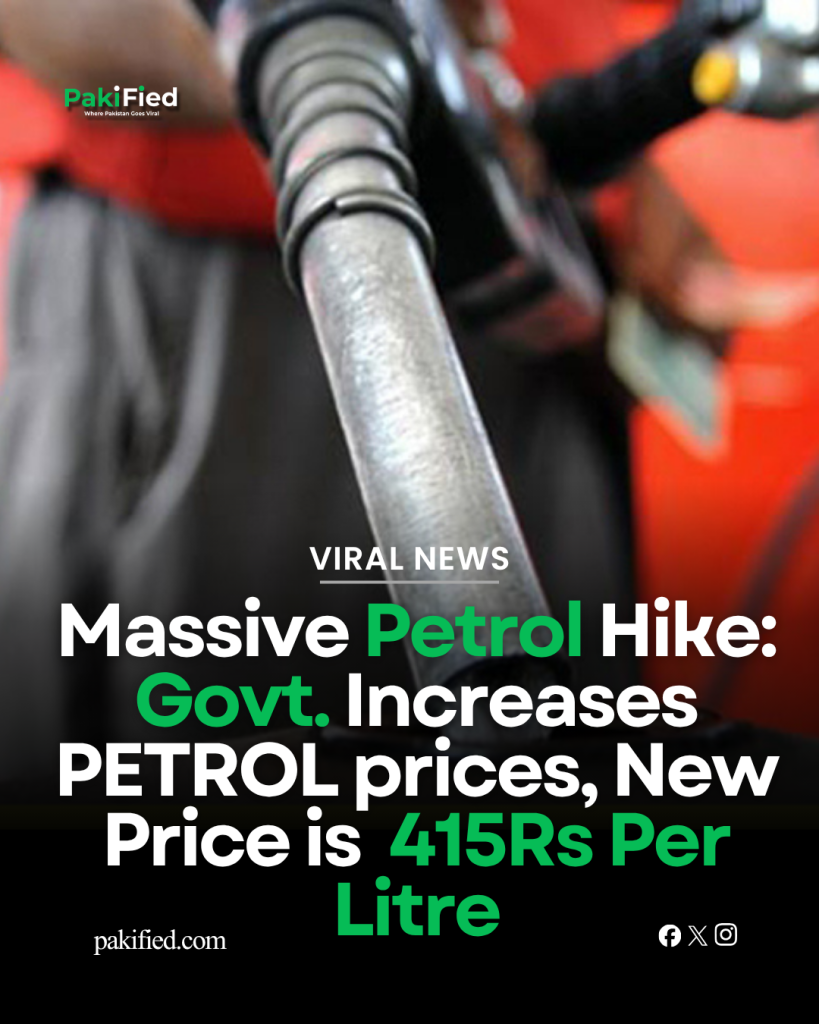
Every Friday night has become a moment of dread for millions of Pakistanis. The government announces new fuel rates and the numbers keep climbing higher and higher. The petrol price in Pakistan May 2026 has now crossed Rs 414 per litre after the latest revision on May 9, pushing the cost of living to new highs for ordinary citizens across the country. This is the fourth fuel price hike since the Iran war began and there is no clear end in sight.
Here is everything you need to know about the latest fuel price increase and what it means for Pakistan.
What Are the New Petrol and Diesel Prices?
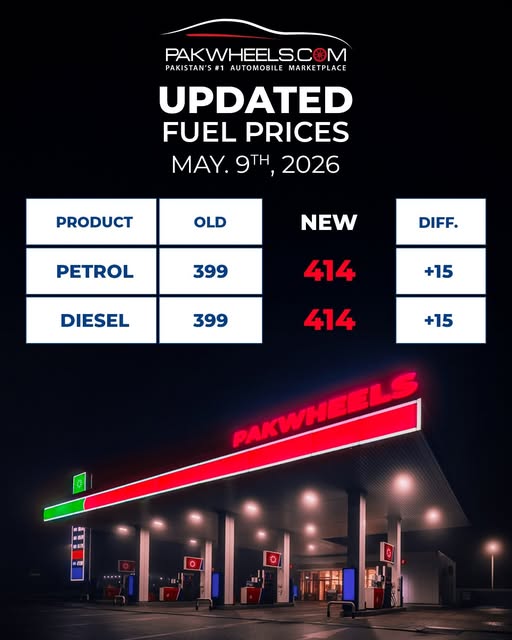
The latest petrol price hike Pakistan May 9 came into effect from midnight on May 9, 2026 after an official notification issued by the Petroleum Division. The new rates are as follows:
Super Petrol has been increased by Rs 14.92 per litre, bringing the new price to Rs 414.78 per litre. High Speed Diesel has been raised by Rs 15 per litre, climbing to Rs 414.58 per litre. Light Speed Diesel now stands at Rs 159.76 per litre. Kerosene Oil has been revised to Rs 467.48 per litre.
It is worth noting that the petrol price in Pakistan May 2026 at actual pumps is slightly higher than the official rate due to dealer margins and local adjustments, meaning most consumers are paying over Rs 415 per litre at the pump. This is a staggering number for a country where the average daily wage for a labourer is still under Rs 1,500.
This petrol price hike Pakistan May 9 is the fourth consecutive weekly increase since the Iran war disrupted global oil markets in late February 2026. Just one week earlier on May 1, petrol had been raised by Rs 6.51 per litre and diesel by Rs 19.39 per litre. Before that, on April 2, the government had announced a historic 43 percent increase in petrol and a 55 percent increase in diesel in a single notification, sending shockwaves across the entire country.
Also read: How Rising Inflation Is Impacting Pakistani Families
Why Are Fuel Prices Rising Every Week?

The answer lies in a combination of global and local factors that are all hitting Pakistan at the same time. The primary reason behind the surge in Iran war fuel prices Pakistan is the closure of the Strait of Hormuz, through which nearly one fifth of the world’s oil and gas supply passes during normal times. After the US-Israeli war on Iran began on February 28, 2026, this critical shipping route became severely disrupted, causing international crude oil prices to spike dramatically.
Pakistan imports almost all of its crude oil, which means that any increase in global oil prices directly translates into higher fuel costs for Pakistani consumers. The Pakistani Rupee’s relative weakness against the US Dollar adds another layer of pressure because oil is purchased in dollars on international markets.
On top of this, OGRA petrol price Pakistan calculations include a heavy tax burden that consumers carry on every single litre they purchase. Currently, over Rs 150 per litre in taxes and levies is built into the price of petrol. This includes a petroleum levy of Rs 103.50, customs duty of Rs 23.72, freight charges of Rs 17.14, and dealer and industry margins on top of that. OGRA petrol price Pakistan revisions now happen every single week on Friday night, a system adopted specifically to track the volatile global market in real time during the ongoing geopolitical crisis.
The government has stated repeatedly that it has no room to absorb the increase because the International Monetary Fund programme demands that fuel prices reflect actual market costs without politically motivated subsidies.
How Is This Affecting the Common Pakistani?

The impact of the Pakistan diesel price increase 2026 is being felt far beyond the petrol pump. Diesel is the backbone of Pakistan’s transportation and agriculture sectors. Every truck, bus, tractor, and generator in the country runs on diesel. When diesel prices rise, the cost of transporting food, goods, and raw materials rises with it. That cost is passed on directly to the consumer in the form of higher prices for flour, vegetables, chicken, and everyday household items.
For the average working Pakistani, the petrol price in Pakistan May 2026 hitting Rs 414 per litre means that motorcycle fuel costs, rickshaw fares, and daily commuting expenses have all increased significantly within a matter of weeks. Small business owners who depend on delivery services or transportation are being squeezed from both sides, paying more to move goods while customers have less money to spend.
Economists have warned that if fuel prices remain at these levels, Pakistan’s already elevated inflation rate will rise further in the coming weeks. The poorest segments of society, who spend the largest portion of their income on food and transport, will bear the heaviest burden of this crisis.
What Can the Government Do to Give Relief?

The government is not entirely powerless when it comes to the OGRA petrol price Pakistan situation. In April, Prime Minister Shehbaz Sharif demonstrated this by slashing the petroleum levy by Rs 80 per litre just one day after a massive price hike, bringing petrol down to Rs 378 per litre. This shows that the government has tools available to provide temporary relief even within the constraints of the IMF programme.
Reducing the Iran war fuel prices Pakistan burden on consumers could involve further cuts to the petroleum levy, temporary reductions in customs duties, or targeted subsidies for commercial transport operators like truckers and public buses. The government could also explore fast-tracking the Iran-Pakistan gas pipeline negotiations now that Pakistan has played a key diplomatic role in Middle East peace efforts, which could reduce long-term energy import costs significantly.
Opposition parties and civil society groups are also pushing back. A citizen recently filed a petition in the Federal Constitutional Court demanding the government cap petrol price in Pakistan May 2026 at Rs 200 per litre, arguing that the current rates are unconstitutional given their impact on fundamental rights. The case is ongoing and reflects the growing public anger over fuel price volatility.
On the Pakistan diesel price increase 2026, the government must act to protect the agriculture and transport sectors specifically, as these directly impact food security and supply chains for all 240 million Pakistanis. The petrol price hike Pakistan May 9 may be the fourth in a row, but it should also be a wake-up call for policymakers to find sustainable long-term solutions to Pakistan’s fuel dependency crisis.