
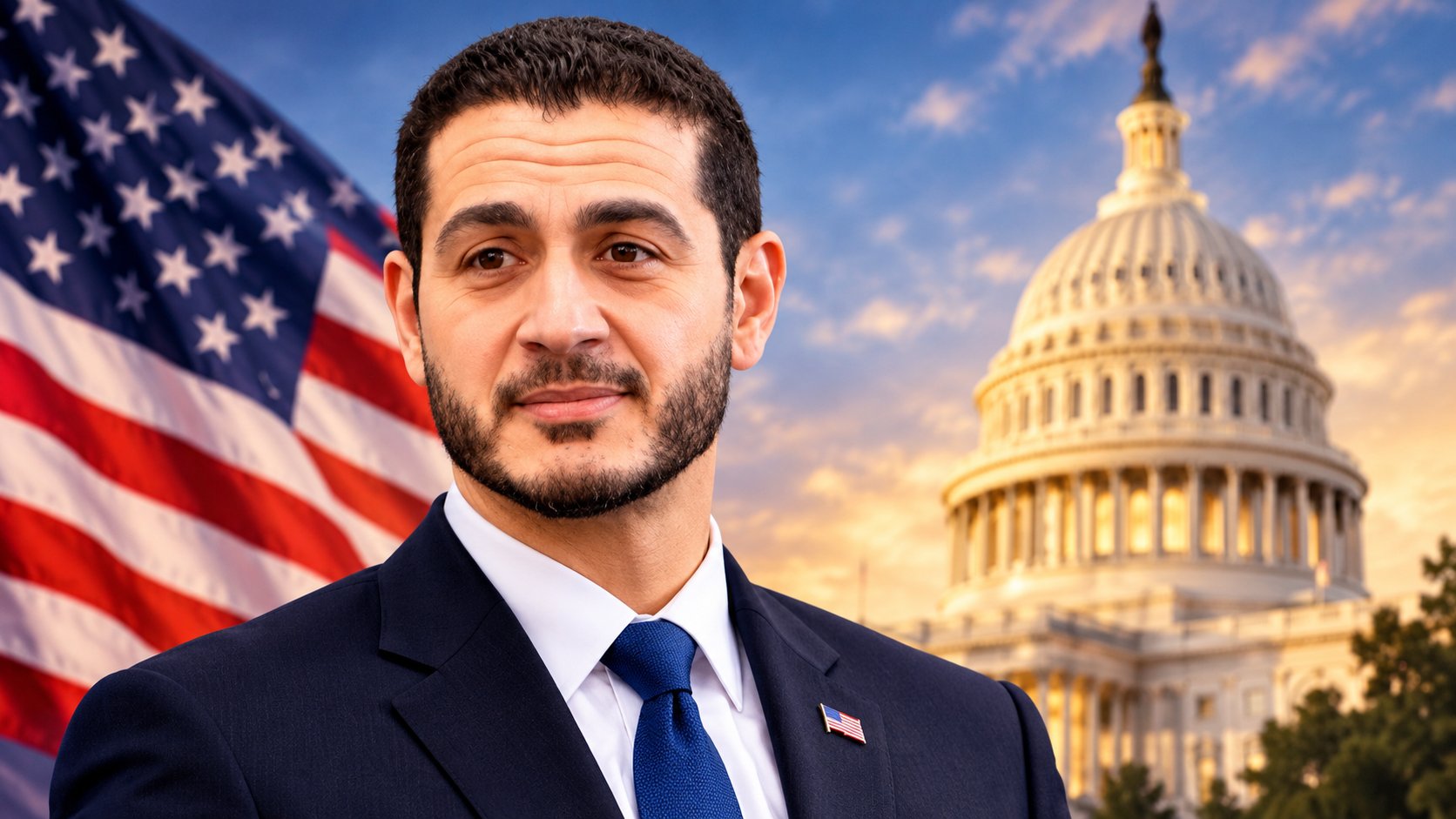
Abdul El-Sayed Wins Michigan Senate Seat
Democrat Abdul El-Sayed has won Michigan’s open US Senate seat, defeating Republican Mike Rogers in the 2026 midterm elections and becoming the first Muslim elected to the United States Senate in American history. The Associated Press called the race early on Wednesday, November 4, 2026, with El-Sayed leading Rogers by roughly 52 percent to 46 percent.
With the victory, El-Sayed is set to become the first Muslim senator in US history when he is sworn in on January 3, 2027. His win also preserved a crucial Democratic seat in the party’s fight for control of the Senate, denying Republicans a chance to flip one of the most closely watched races of the midterms.
El-Sayed declared victory at an election night party in Detroit, Michigan, in the early hours of Wednesday, celebrating with his wife, Dr Sarah Jukaku, on stage. In his victory speech, he addressed the president directly, saying he was constitutionally obligated to swear him in in January.
The Result in Numbers
The Michigan Senate race was one of the most expensive and bitterly fought contests of the 2026 midterms. The seat was open because Democratic Senator Gary Peters, who served two terms, chose not to seek re-election, leaving both parties fighting for an open seat in a battleground state.
The AP called the race at 2:27 AM on Wednesday, with around 85 percent of the vote reporting and El-Sayed ahead by about 52 percent to 46 percent. Later tallies put his lead at a similar margin, roughly 52 percent to 46 percent, though exact final figures may shift slightly as counting continues and results are certified.
Going into Tuesday’s midterm elections, Republicans held a 53-47 majority in the Senate, with Democrats needing a net gain of four seats to take control. Holding Michigan was therefore essential for Democrats, and El-Sayed’s win kept that path alive.
The result also underlined Michigan’s recent political history. No Republican had won a US Senate race in Michigan since 1994, and Democrats have held this particular seat since 1979. Rogers, who had lost the 2024 Senate race to Democrat Elissa Slotkin by fewer than 20,000 votes, fell short again despite strong backing from President Donald Trump and national Republicans.
Who Is Abdul El-Sayed?
Abdul El-Sayed is 42 years old, a medical doctor and a former public health official. He was born in Rochester Hills, Michigan, to Egyptian immigrant parents and was raised in the Detroit area.
Before entering the Senate race, El-Sayed served as director of the Wayne County Department of Health, Human and Veterans Services in Michigan. He resigned from that role in April 2025 to run for the US Senate. His background in medicine and public health shaped his campaign, which focused on lowering costs for working families and reducing corporate influence in politics.
His platform included Medicare for All, a government-funded universal healthcare programme championed by the progressive wing of the Democratic Party. That platform, and his progressive politics, made his victory a breakthrough moment for the party’s left wing, showing that a progressive candidate could win a high-profile race in a purple battleground state.
El-Sayed’s win also made him the first Democratic doctor in the Senate since 1969, adding another layer of history to a night already full of it.
A Bitter and Divisive Campaign
The Michigan Senate race was marked by bitter attacks, including a campaign of anti-Muslim rhetoric aimed at El-Sayed. His opponent, Mike Rogers, 63, a former congressman and FBI agent, entered the race with strong backing from Trump and national Republicans, and sought to cast El-Sayed as a radical candidate sympathetic to Islamic extremism through alleged ties to the Muslim Brotherhood.
El-Sayed denies those claims, which remain unsupported by evidence, and Democrats said the attacks relied on Islamophobic tropes. Al Jazeera described his victory as coming “despite racist attacks”, noting that the campaign against him was spearheaded by President Donald Trump himself.
Rogers also devoted significant effort to courting Jewish voters who may have been uneasy with El-Sayed’s opposition to US military aid for Israel and his characterisation of Israel’s actions in Gaza as genocide. In the closing weeks of the race, Rogers broke with the president on the war in Iran and the US trade dispute with Canada, arguing that ending both was necessary to help bring down costs for businesses and consumers. But he struggled to overcome voter concerns about the economy and Trump’s low ratings.
The campaign also featured an unusual late twist. El-Sayed had beaten Congresswoman Haley Stevens in the Democratic primary in August, but Stevens then endorsed Rogers in the final days of the campaign, a move Reuters described as an unexpected boost for Republicans. It was not enough to change the outcome.

Why This Win Matters
El-Sayed’s victory is historic on several levels. He is the first Muslim ever elected to the US Senate. Muslim Americans have previously served in the House of Representatives, but no Muslim had ever won a Senate seat before this result. His swearing-in on January 3, 2027 will therefore mark a first in the more than 230-year history of the chamber.
The win also matters politically. It was a breakthrough for the Democratic Party’s progressive wing, which had faced doubts about whether its candidates could win in competitive swing states. El-Sayed’s victory in Michigan, a state that both parties fight hard for, answered those doubts, at least for one night.
For Democrats more broadly, holding Michigan kept their hopes of regaining Senate control alive. The party needed a net gain of four seats, and losing an open seat in a battleground state would have made that task far harder. Instead, El-Sayed held the seat and gave the party a new star in the process.
For Muslim Americans, the result carries a symbolic weight of its own. El-Sayed won despite a campaign that targeted his faith, and his victory speech framed the moment as a rejection of hate. As Al Jazeera put it, he won by “rejecting hate”, a message that resonated far beyond Michigan.
What Happens Next?
El-Sayed will replace outgoing Senator Gary Peters, whose second term concludes on January 3, 2027. The senator-elect will be sworn in at the start of the new Congress in January 2027, after state officials certify the results.
Once in office, he will join a Senate where Democrats are fighting to regain control, and where his progressive platform, including Medicare for All, will face the hard realities of a closely divided chamber. How much of his agenda he can advance will depend on the final balance of power after all midterm results are settled.
For now, though, the story is the history itself: a 42-year-old doctor from Michigan, the son of Egyptian immigrants, has become the first Muslim elected to the United States Senate, winning one of the hardest-fought races of 2026.
Disclaimer: This article is based on reports from Reuters, the Associated Press, Al Jazeera and The Express Tribune as of November 4, 2026. Final vote margins may shift slightly as counting and certification continue. This article presents campaign claims with attribution; allegations against El-Sayed during the campaign were denied by him and remain unsupported by evidence according to Reuters.